Research 2023

AGONG BAHARU – PEMIMPIN WIBAWA BERJIWA JELATA

Majlis Raja-Raja dalam mesyuaratnya ke-263 pada 27 Oktober 2023 telah bersetuju mengisytiharkan, Sultan lbrahim Ibni Almarhum Sultan Iskandar, Sultan Johor untuk dipilih sebagai Kebawah Duli Yang Maha Mulia Seri Paduka Baginda Yang di-Pertuan Agong, selama tempoh lima tahun mulai 31 Januari 2024 – lantas menjadikan Baginda sebagai YDPA ke-17 dalam sejarah sistem pemerintahan bergilir yang unik di Malaysia dan buat julung kalinya juga, Baginda memegang jawatan tersebut selepas 34 tahun pemerintahan ayahandanya, Almarhum Sultan Iskandar Ibni Almarhum Sultan Ismail, YDPA ke-8 pada 1984.
Khabar pelantikan Baginda sebagai YDPA yang baharu ternyata diterima dalam pelbagai nada dan nuansa dalam kalangan jelata. Rata-ratanya melihat kehadiran sosok Sultan Ibrahim di peringkat pusat ini bakal menganjak dinamika hubungan antara istana dan Kerajaan Persekutuan ke satu lembaran yang lebih menarik untuk diperhatikan.

Malaysia’s Teaching System in a Meaningless Vacuum

By Mohd Khairul Ramli The 2022 PISA results are a stark reminder that education, already facing challenges, has been dealt a devastating blow. Across the board, scores in reading, math, and science have declined, painting a picture not just of learning loss, but of a systemic malaise demanding immediate and critical attention. While the pandemic …

Malaysia’s Teaching System in a Meaningless Vacuum Read More »

INSAP ECONOMIC REPORT: Malaysia’s Economic Outlook in a Changing Economic Landscape for 2024

The global economic landscape is fraught with uncertainties and challenges, with the dynamics between the United States and China playing a pivotal role. This report delves into the economic outlook of these two powerhouses and their impacts on the world while scrutinizing Malaysia’s economic development and business forecast for 2024. In the United States, fluctuations in inflation and interest rates are under scrutiny, alongside predictions of macroeconomic statistics. Meanwhile, China’s economic trajectory is examined, providing insights into its recovery and prospects.
Shifting our focus to Malaysia, the report explores the patterns of economic growth and the critical domestic drivers influencing its economic landscape. Factors such as the Overnight Policy Rate, international reserves, exchange rates, property markets, and financial stability are analysed to provide a comprehensive understanding of the nation’s economic health. The report extends its gaze to 2024, outlining Malaysia’s economic outlook through expenditure components. Final consumption expenditure, gross fixed capital formation, and the dynamics of exports and imports are dissected to project the nation’s economic trajectory. However, looming concerns cast shadows on Malaysia’s economic horizon. Anticipated economic slowdown, persistent financial headwinds, the impact of taxes on inflation, and the development of artificial intelligence pose challenges. Moreover, geopolitical factors such as the reshaping of diplomacy in presidential elections and rising tensions between China and Taiwan create an environment of uncertainty.
In conclusion, this report serves as a guide, navigating the intricate web of global economic dynamics, dissecting key trends, and providing insights into potential challenges and opportunities that lie ahead for Malaysia in 2024. The interconnectedness of nations and the delicate balance of economic forces underscore the need for strategic foresight and adaptability in the face of a rapidly evolving global landscape.


Hopes and Hard Realities: Singapore-Malaysia Leaders’ Retreat

The recent Malaysia-Singapore Leaders’ Retreat, held on January 9th, 2024, offered a comprehensive glimpse into the intricate dynamics and evolving relationship between the two neighbouring nations. While headlines often focus on the spiky issues of water rights, immigration, and jostling for economic primacy, the retreat offered a glimpse into a broader cooperation, concerns, and the ever-present challenge of finding common ground.

This year’s meeting was particularly significant, occurring against the backdrop of political shifts in both countries. The recent Malaysian elections ushered Anwar Ibrahim into power, sparking expectations of a fresh chapter in bilateral ties. Meanwhile, Singapore grappled with internal uncertainties, questioning the long-held dominance of the People’s Action Party (PAP). The fluidity in leadership presented both challenges and opportunities, setting the tone for discussions on a myriad of issues.

YOUTH UNDER-EMPLOYMENT IN MALAYSIA: Factors and its implications on Malaysia’s growth and future

The youth underemployment1 situation in Malaysia has yet to garner the needed attention despite its concerning numbers. In 2021, there were 4.57 million employed graduates, where 2.9% were time-related underemployed2 while 33.9% were skill-related-underemployed3. Overall, the proportion of underemployed youth (% of total graduate workforce) has remained largely unchanged from 2017 to 2023 while nominal numbers show an uptrend, showing a need for reassessment of intervention strategies.
With underemployment among youth comes various other challenges, including a relatively low average salary for graduates. In fact, 28.7% of graduate placements in 2022 began with monthly earnings below RM1,999. Couple this with the lack of high-skilled job creation (only 12% of jobs created per annum from 2010 to 2019), there is little room for these graduates to experience both career and wage advancements. Additionally, the market of medium to low skill jobs become more concentrated as higher skilled graduates are pushed into these sectors, competing with lower skilled graduates hence further pressure to push down real wages.
What are the consequences of a delayed action to deal with this?

MOTAC’s Inaction on Malaysia Tourism

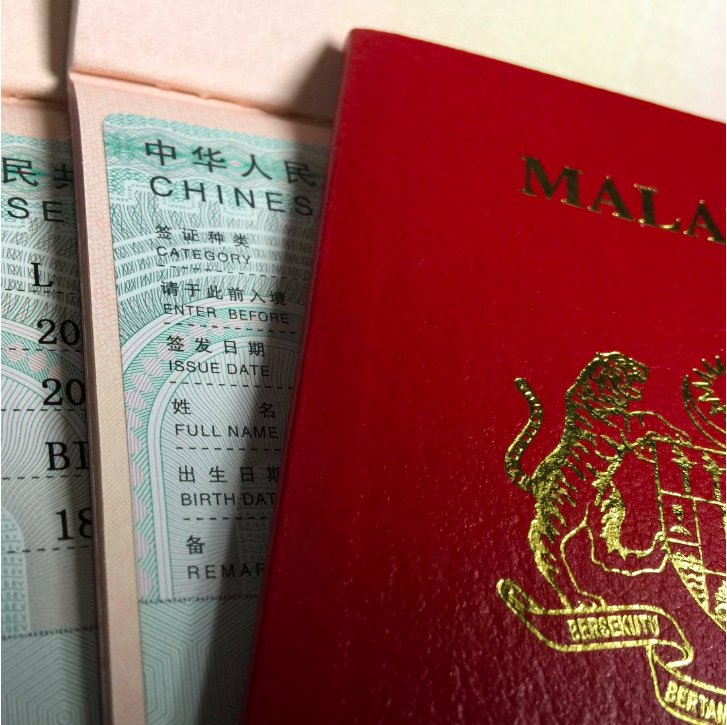
Malaysia’s 30-day visa-free policy for Chinese tourists has seen an increase in arrivals, but attracting and engaging this large market requires more than just an open door. Industry players need to understand Chinese travellers’ preferences and tailor experiences accordingly, considering cultural nuances and preferred digital platforms. Additionally, sustainable practices like eco-friendly tourism and community engagement can ensure that both tourists and locals benefit from the increased tourism activity.

Malaysia High-Speed Rail on A Bumpy Ride

The Kuala Lumpur-Singapore High-Speed Rail (HSR) project promised to be a shining beacon of progress, slashing travel time between the two nations and spurring economic growth. Yet, instead of gleaming tracks and swift carriages, what we have is a tangled mess of flip-flops, soaring costs, and a trail of wasted taxpayer money on the sheer extravagance of irresponsible policymaking and its heavy toll on the nation’s pocket.

INSAP Brief: Malaysia’s Water Woes

Malaysia is a country blessed with relatively robust water reserves via a wide access to ample rainfall averaging 3,000mm annually and rich surface water resources such as rivers which provides approximately 97% of raw water used in agricultural, domestic and industrial sectors.1 Given this rich supply of liquid gold, one would expect that the mass population would receive uninterrupted access to clean water. However, the country has faced a myriad of water problems over the years which includes the ageing piping system, increasingly worrying pollution affecting our water sources and the rising non-revenue water (NRW) figures at national level.

PADU: DATA DREAMS OR PANDORA’S BOX?

The Pangkalan Data Utama (PADU), recently introduced by the Madani government aims to be a social safety net built on a vast database of personal information where Malaysian citizens above 18 years old regardless of their background would have to contributed to this massive collection of personal data to date. While the promise of targeted support is appealing, the Minister of Economy has yet to address several flaws prior to the grand launch on 2nd of January 2024.

THE LOOMING CHALLENGE: YOUTH UNEMPLOYMENT AND IT’S POLITICAL IMPLICATIONS

Youths are supposed to be future tech-savvy leaders, bringing nations forward. Yet in Malaysia, we have nearly half a million young people who are jobless or at least that is what the number tells us. This is the harsh reality we face. From an economic perspective, the national unemployment rates may seem deceptively low at 3.4% but digging beneath the surface would unearth a brewing crisis.
As of October 2023, over 310,000 young Malaysians, aged 15-24 are unemployed with that number soaring to nearly 440,000 when we consider a wider youth scope, aged 15- 30.1 While some see them as mere numbers, we see faces. Over 187,000 graduates with hard-earned certifications could not find a job in 2022, pointing to a deeper problem in the system, suggesting a structural mismatch. This issue is only expected to get worse with number of graduates steadily increasing over the years where 5.92 million graduated last year.2 Is the government implementing enough initiatives beyond job fairs to effectively address this issue?

Scroll to Top